
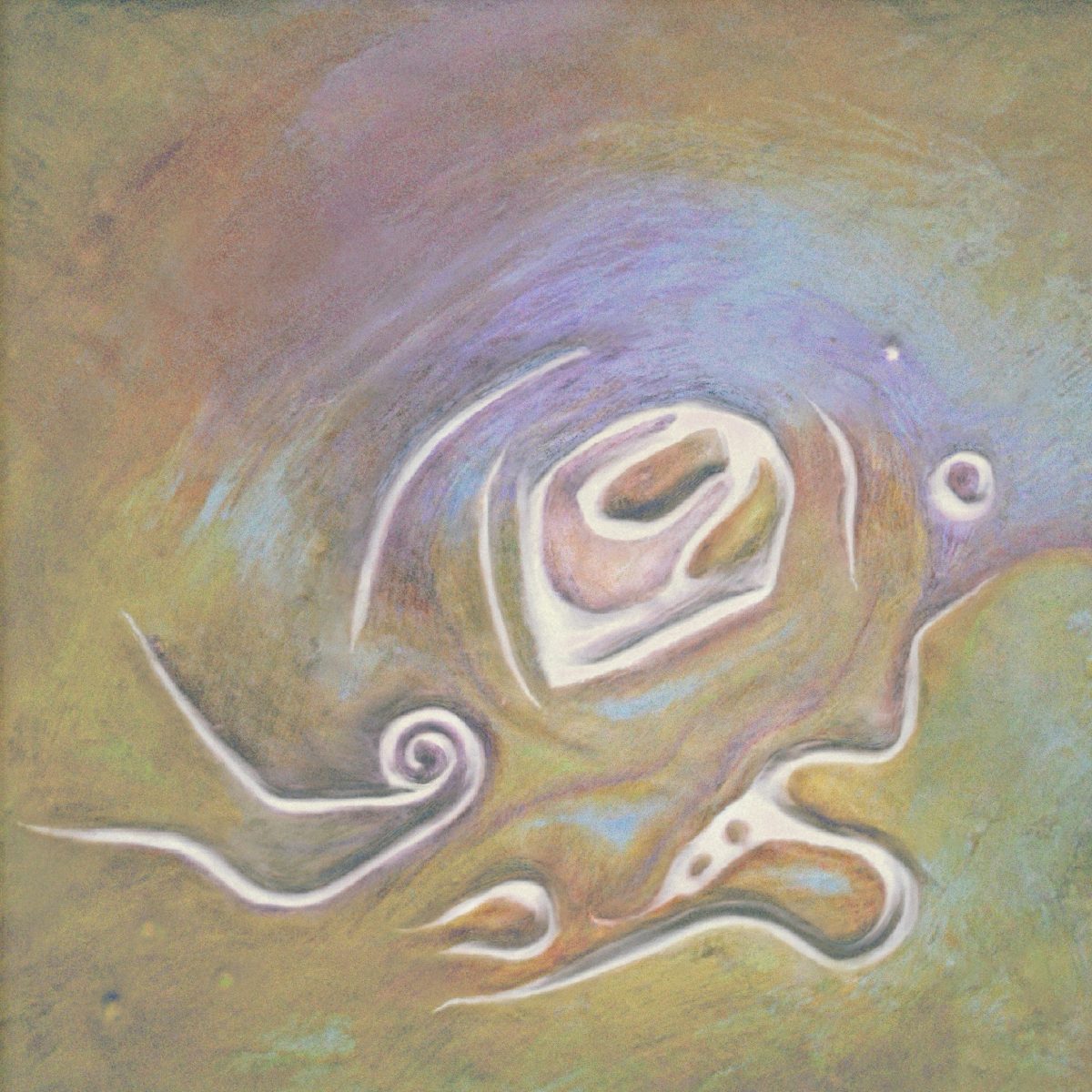
Bug Teeth: Micrographia
Via state51
Out Now
Leeds-based and now expanded to a five-piece, PJ Johnson and bands’ debut album comes the week of a short national tour destined to steal hearts and minds.MK Bennett listens carefully.
The basic overview of Micrographia online states that “Micrographia” can refer to two things: “an acquired medical condition causing unusually small and cramped handwriting, often associated with Parkinson’s disease, or a landmark 1665 book by Robert Hooke titled Micrographia, which detailed his microscopic observations. The medical condition involves difficulty with fine motor skills, while the book is famous for its detailed engravings of the microscopic world and illustrations of tiny organisms. “It also includes notes on observations of distant planets, which must have seemed like witchcraft to public tastes in the Seventeenth Century. Assuming the medical condition is, in terms of its etymology, directly related to the book, it is still no less interesting, considering the album itself is a rumination and exploration of grief and loss, and musically it travels other worlds with an alien beauty.

There is an aching deep in the bones of this thing that could only come with missing someone. Every chord sequence and every sigh sounds like a cry in the dark. It is not just candles in the bath misery music either, but art that makes you think. Not that you have to empathise, it works on a purely surface level too, if required, as all great art must.
Tapeworm is a subtle and sober opener, both jaunty and melancholic, as if something is crawling beneath its skin and they’re trying to scratch it out. Its quietude is discomforting, in a good way. Imagine The Blue Nile rerecording Lou Reed’s Berlin in the Welsh countryside. A fairytale melody opens into a lovelorn vocal, and despite the seemingly different narratives, it is reminiscent of recent Bat For Lashes. Both sit within a fear of motherhood, though the perspectives are very different. Ammonite is a slow-motion funk that walks with a limp, and a lyric that uses memory as a jewellery box, the feel of glass as a good luck charm. Ammonite, the fossil, is a long-dead thing, a thing that lived, that we can never know or understand. An ultimate symbol of many parent-child relationships, where one can never really know the other. Musically, that slinking bass and keyboard line is deceptively catchy, while a more snaking vocal works its way across the top. The enormous, near-metal guitar that drops in lends heft to the meaning and the sound. Modern and ancient, it is a wonderful sound this band creates.
Topiary is a rock song you can dance to, but played on the Waltzers at a funfair, the 90s drums and electronic enhancement giving it a spectral sound, backwards-masked Middle Eastern flavours mixing in nicely with the distortion. The altogether prettier noise of Thin Circle is next in the cycle, ghost voices and almost Junglist drums crashing happily together while a sampled vocal suggests the unsayable, a glimpse of conversation that eventually becomes pure rhythm
If the first section of the album is broadly upbeat and it’s definitively thematic, then the stages of grief become apparent on the next song. Crunch Went The Snow, a song band leader PJ Johnson describes as, “A memory of being a child in the snow. The beauty and devastation of the natural world, the acceptance of both.” The quiet melancholia of the music, like The Cocteau Twins gone to church, takes its time to tell its secrets, stretching out and settling in, sound effects too; it works deliriously well, a hymn to lost things. Merricat, which sounds like a childhood nickname or name of a house on a posh street, is back up, its big drums and August holiday vibe in contrast but not unwelcome, musically a sort of pensive Lily Allen and a surprisingly fitting funk/reggae workout for the guitarist. Considering the subject, it’s joyous, but it is memory based, where emotions don’t tend toward the singular.
The light funkiness continues on the wah-wah intro to Warp and Weft II, though it gradually settles into a more adult country approach, building towards a glorious coda of jangling and harmonising before returning to a blissful and blessed serenity, a song seemingly about the deceit of memory, where grief meets self-knowledge unflinchingly. My Stupid Tree-Frog Daughter, a reference to Murakami, that like the rest of the album wears its literary influences lightly but proudly. A twinkling of dashed and effected guitar strokes blends into a hypnotic reverie, the backing, like U2 when they were still good, but more fleeting, the whole thing heading for the stars, unable to admit defeat. Light as a feather yet heavy as lead, it somehow seems saddened but accepting, the waves rolling in and washing you clean. It dances like Tim Buckley, swoons like Mazzy Star.
Collections is more upbeat with a glorious violin and pizzicato strings, frantic but layered with calm, a song about the comfort of a return to ritual, a coming back together of the self. The vocal sits atop the music but is slightly separate, as if the story is unfinished, the ending unknown. A strident, near military tone and yet another beauteous guitar line. The musicians serve all these songs masterfully, the arrangements subtle and spacious. Strings bob and weave, hit you unexpectedly and disappear again, like a child at a wake, stealing spirits and making mischief. Landscaping drifts and ebbs, the gorgeous repetition a frame to build a wall of echoed voices, protection from the elements and a lamentation of hopeful memory to finish. The deliberate womb-like atmosphere contradicts the otherness of the words, a complicated and unresolved grief. As the Shangri-La’s once sagely noted, You Can’t Go Home Anymore.
A haunting and deeply moving work of genuine depth and emotion. Although these themes can never be fully resolved, this record serves as a poignant elegy to the departed, with all its confusion and sadness, and is well worth its weight in all precious metals. Another walk across the rooftops.
Bug Teeths Insta | Facebook | Bandcamp
All words by MK Bennett, you can find his author’s archive here plus his Twitter and Instagram
A Plea From Louder Than War
Louder Than War is run by a small but dedicated independent team, and we rely on the small amount of money we generate to keep the site running smoothly. Any money we do get is not lining the pockets of oligarchs or mad-cap billionaires dictating what our journalists are allowed to think and write, or hungry shareholders. We know times are tough, and we want to continue bringing you news on the most interesting releases, the latest gigs and anything else that tickles our fancy. We are not driven by profit, just pure enthusiasm for a scene that each and every one of us is passionate about.
To us, music and culture are eveything, without them, our very souls shrivel and die. We do not charge artists for the exposure we give them and to many, what we do is absolutely vital. Subscribing to one of our paid tiers takes just a minute, and each sign-up makes a huge impact, helping to keep the flame of independent music burning! Please click the button below to help.
John Robb – Editor in Chief


Leave a Reply